

A content marketing strategy is the documented plan that connects what you publish to specific business outcomes: more revenue, lower acquisition costs, better retention. It answers why you’re creating content before anyone touches a calendar. Every working strategy has five moving parts:
- Goals tied to business metrics, not vanity numbers
- Audience definitions specific enough to guide topic choices
- Content pillars that map to what your audience actually searches for
- Measurement that connects publishing to pipeline
- Governance so someone owns quality and consistency
The first move isn’t opening a spreadsheet. Run a 30 minute goals and audience workshop with whoever owns revenue in your company, and leave with one paragraph that states your target audience, your top three content pillars, and the single metric you’ll judge success by. Tools like Google Analytics and HubSpot can tell you who’s already engaging with your site, and running that data through Semrush before the workshop gives you a head start on what your audience is actually typing into search bars.
Key Takeaways
A content marketing strategy only drives revenue when goals, audience definitions, and measurement are documented before a single piece of content gets scheduled.
| Point | Details |
|---|---|
| Separate the three layers | Build strategy first, then a plan, then a calendar, never collapse them into one document. |
| Balance your funnel | Aim near 50% TOFU, 30% MOFU, 20% BOFU content instead of an awareness-only mix. |
| Audit before creating | Inventory existing content and refresh high-traffic pages before writing anything new. |
| Measure what matters | Match KPIs to funnel stage and review performance weekly, monthly, and quarterly. |
| Get agency support | Allcitygraphixny builds strategy, content, and web design together so execution never drifts from the plan. |
Table of Contents
- Why a Content Marketing Strategy Matters for Your Business
- What’s the Difference Between a Content Strategy, a Plan, and a Calendar?
- How Do You Create a Content Marketing Strategy Step by Step?
- How Do You Run a Content Audit and Competitor Analysis?
- Building an Editorial Calendar That Scales With Your Team
- What KPIs and Tools Should You Use to Measure Content Performance?
- How Do You Govern Content So It Stays Fresh?
- Templates: Content Brief, Priority Score, and a Promotion Checklist
- Where Do Content Strategies Usually Go Wrong?
- What Do Successful Content Marketing Strategies Look Like?
- How We Approach Content Strategy for Clients
- Need Help Turning Strategy Into Results?
- Sources
Why a Content Marketing Strategy Matters for Your Business
Executives don’t fund content marketing because it’s creative work. They fund it because a documented strategy links content to specific business growth: audience building that translates into measurable results like revenue, lower costs, and stronger customer relationships, according to the Content Marketing Institute. Skip the strategy step, and you’re just producing volume with no attribution back to the P&L.
Here’s the outcomes that a real strategy can drive:
- Revenue influence through content that ranks for buying-intent keywords and moves prospects toward a decision
- Lower acquisition cost compared to paid channels that stop working the moment budget dries up
- Higher-quality leads because well-targeted content self-selects for the right audience
- Retention and activation through content that answers questions after the sale, not just before it
The scale of opportunity is bigger than most teams assume. The average internet user spends roughly six hours and 40 minutes online daily, which means the competition isn’t for eyeballs, it’s for relevance within that window.
Pro Tip: When pitching leadership, never lead with output metrics like “we’ll publish 12 blog posts a month.” Lead with the outcome: “we’ll build a content asset that generates qualified leads at a lower cost than paid search within two quarters.” Outcomes get budget approved. Output gets budget cut.
What’s the Difference Between a Content Strategy, a Plan, and a Calendar?
Most teams collapse three distinct layers of planning into one document, and that’s exactly why so much content gets produced without ever moving a business metric. Experts split this into strategy, plan, and calendar, and recommend building strategy first so every downstream decision inherits a clear objective, according to Monday.
The strategy defines why you’re doing this and which business outcome you’re chasing. The plan turns that why into an operational roadmap: audiences, pillars, formats, workflows, timelines, and KPIs, as Airtable’s content marketing plan guide lays out. The calendar is the tactical schedule, the specific dates, owners, and publish slots.
| Layer | Core Question It Answers | Example Decision |
|---|---|---|
| Strategy | Why are we creating content? | Grow organic leads significantly this year |
| Plan | How will we operate and resource it? | Two blog posts weekly, one gated guide monthly, owned by a content lead |
| Calendar | What publishes when? | Blog post on pricing objections goes live Tuesday, March 10 |
Pro Tip: Write the strategy document first, even if it’s one page. Teams that jump straight to a calendar end up producing content that fills slots instead of content that moves a number, and confusing these layers is one of the most common reasons production effort gets wasted.
How Do You Create a Content Marketing Strategy Step by Step?
Building a strategy from scratch isn’t complicated, but skipping steps is exactly how teams end up with a folder of blog posts that never converts. Here’s the sequence that works, in order, with no shortcuts.
1. Define goals with real KPIs
Pick one primary business goal (revenue influence, lead volume, retention) and attach a specific KPI to it: organic sessions from target keywords, marketing-qualified leads from content, or content-assisted revenue in your CRM. Vague goals like “increase brand awareness” don’t survive a budget review.
2. Map your audiences and personas
Build two or three personas based on actual customer data, not guesswork. Pull search queries from Google Search Console, pair them with customer interview notes, and write down what each persona is trying to accomplish at each funnel stage.
3. Run a content audit
Before creating anything new, inventory what already exists. You’ll find pieces worth updating, repurposing, or retiring, which is almost always faster than starting from zero.
4. Define your content pillars
Pillars are the three to five core topics your brand owns. A local law firm might pick “estate planning basics,” “small business contracts,” and “family law FAQs.” Every piece of content should trace back to one pillar.
5. Choose formats and channels
Not every pillar needs a blog post. Some topics work better as video, some as a downloadable checklist, some as an email series. Match format to how your audience actually consumes information, and to where they spend time, whether that’s LinkedIn, YouTube, or organic search.
6. Build a governance model and content brief
Decide who approves what, and standardize a content brief template so writers and designers aren’t guessing at scope. A repeatable brief and production pipeline, meaning brief, draft, edit, publish, distribute, measure, cuts down on revision cycles and speeds up execution, according to Rock.
7. Create your editorial calendar and workflows
Translate the plan into dates. Assign owners, set deadlines with buffer time for review, and build in flexibility for timely topics.
8. Set a measurement and optimization cadence
Decide upfront how often you’ll check performance: weekly for operational metrics, monthly for content performance, quarterly for strategic review. Content that never gets revisited never gets better.
A scoring framework for picking what to write first
Not every topic idea deserves equal priority. Score each one across three to five dimensions and rank by total:
Higher totals don’t automatically win. A high-demand, low-impact topic like the beginner explainer might come first because it’s cheap to produce and builds top-of-funnel traffic, while the pricing guide earns priority despite lower search demand because it directly influences revenue. Weight the dimensions based on your actual goal from step one.
For tools, pair Semrush or Ahrefs for keyword research and competitive gaps, Google Search Console for what’s already driving impressions, WordPress or a comparable CMS for publishing, and a social scheduler for distribution. None of this needs to be expensive to start.
Pro Tip: Keep a copyable content brief template with these fields: audience, goal, call to action, funnel stage, target keyword, word count range, and owner. Fill it out before anyone opens a document to write. It saves entire rounds of revision.
For your first week, run the goals workshop, pull your top 20 pages by traffic from Google Analytics, and draft three personas. For your first 90 days, high-performing teams often treat that window as a test sprint, meaning you validate cadence and formats before committing to a full annual calendar, a structure recommended by Rock.so.
How Do You Run a Content Audit and Competitor Analysis?
An audit tells you what to keep, what to fix, and what to kill. Start with a full inventory of published content, then map each piece to a funnel stage (top, middle, bottom), tag it with performance data (traffic, conversions, backlinks), and flag anything that’s outdated but still gets traffic. Those are your fastest wins, since a refresh often beats a full rewrite.
- Inventory everything published in the last 12 to 24 months
- Map each piece to a funnel stage and a content pillar
- Tag performance using Google Analytics and Google Search Console data
- Flag repurpose candidates: a strong blog post that never became a video or email series
For competitor analysis, focus narrowly. Compare the pillars competitors cover, the formats they favor, and the keyword gaps where they rank and you don’t. Ignore their design choices and social follower counts, those don’t tell you anything about content performance.
Site crawlers plus Semrush or Ahrefs will surface keyword gaps quickly, and Google Search Console shows you which of your own pages are close to ranking on page one but need a content refresh to break through.
Pro Tip: Before scheduling a full rewrite, check if a page’s core information is still accurate and just needs updated examples, a new introduction, and fresh internal links. A 90 minute refresh often outperforms a two week rewrite in both ranking and lead volume.
Building an Editorial Calendar That Scales With Your Team
A calendar only works if it has the right fields and the right owners attached to every row. At minimum, track: title, owner, funnel stage, primary keyword, format, call to action, due date, and status. Teams new to structured planning should work in a 4 to 12 week window rather than committing a full year upfront, since shorter windows are easier to test and adjust, and tentpole events like product launches or seasonal peaks help anchor the calendar’s structure.
The production pipeline should move through consistent stages every time:
- Brief created and approved by the content owner
- Draft written against the brief
- Design or visual assets added if needed
- Review by an editor or subject matter expert
- Publish to the CMS
- Distribute across owned, earned, and paid channels
Assign clear roles so nothing stalls waiting on an unclear approval chain:
| Role | Responsible | Accountable | Consulted | Informed |
|---|---|---|---|---|
| Content strategist | Brief creation | Strategy alignment | SEO lead | Leadership |
| Writer | Draft | On-time delivery | Strategist | Editor |
| Editor | Review, edit | Quality, brand voice | Writer | Strategist |
| Designer | Visual assets | Asset quality | Writer | Strategist |
Set a firm approval service level agreement, such as 48 hours for editor review, so drafts don’t sit untouched for a week waiting on feedback.
What KPIs and Tools Should You Use to Measure Content Performance?
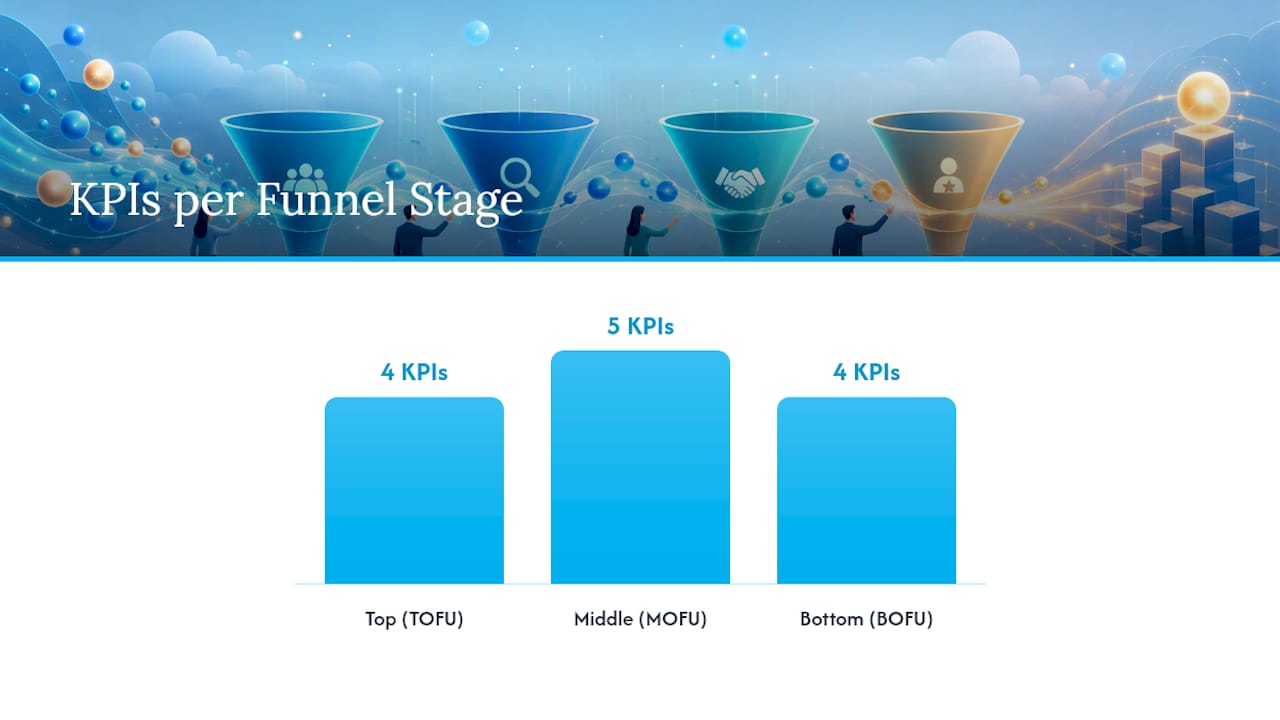
Match your metrics to funnel stage. Top-of-funnel content should be judged on organic sessions, impressions, and new visitor volume. Mid-funnel content earns its keep through email signups, time on page, and return visits. Bottom-funnel content should be judged on demo requests, conversion rate, and content-assisted revenue in your CRM.
| Funnel Stage | Leading Indicators | Lagging Indicators |
|---|---|---|
| Top (TOFU) | Impressions, organic sessions | Ranking position over time |
| Middle (MOFU) | Email signups, return visits | Lead volume, list growth |
| Bottom (BOFU) | Demo requests, gated downloads | Closed revenue, deal velocity |
For attribution, first-touch models work well for understanding what draws people in, while multi-touch models are more useful when a sale involves multiple content interactions across a longer buying cycle, especially for B2B. Choosing the wrong model, or none at all, means measurement disconnects from business outcomes, an issue monday.com’s strategy guide flags as a common failure point.
On tools: Google Analytics and Google Search Console cover organic performance, HubSpot handles lead and pipeline attribution, Semrush and Ahrefs track keyword rankings and competitive movement, and Hotjar shows how visitors actually behave on the page, where they scroll, where they drop off. Review operational metrics weekly, content performance monthly, and run a strategic review quarterly.
How Do You Govern Content So It Stays Fresh?
Someone needs to own quality, or standards drift the moment a strategy scales past one writer. Set a simple RACI: an editorial lead is accountable for consistency and voice, writers are responsible for drafts, and a subject matter expert is consulted on anything technical or regulated.
For maintenance, teams that over-invest in producing new content while under-investing in workflow and governance tend to hit scaling failures once volume increases, a pattern the Content Strategy Quad framework calls out directly. Build a review cadence: high-traffic pages get checked every 90 days for accuracy and updated examples, evergreen guides get a full review annually, and anything that’s stopped earning traffic or backlinks after a year gets archived or merged into a stronger page.
- Check high-traffic pages every 90 days for outdated stats or broken links
- Review evergreen guides annually against current search intent
- Archive or consolidate pages that have gone flat for over 12 months
Pro Tip: Treat brand voice and accessibility as quality gates, not afterthoughts. A style guide that covers tone, reading level, and alt text requirements catches more consistency problems than any editor working alone ever will.
Templates: Content Brief, Priority Score, and a Promotion Checklist
A brief prevents the single most common production delay: writers guessing at scope. Use these fields every time.
| Field | What to Include |
|---|---|
| Audience | Persona name and their core need |
| Goal | The business outcome this piece supports |
| Call to action | What you want the reader to do next |
| Funnel stage | TOFU, MOFU, or BOFU |
| Target keyword | Primary search term |
| Word count | Range, not an exact number |
| Owner | Who’s accountable for the draft |
For prioritization, score every idea on business impact, search demand, and ease to produce, each on a 1 to 5 scale, then weight based on your current goal (a lead-gen focused quarter should weight business impact higher than search demand).
Once something publishes, distribution can’t be an afterthought, content that isn’t actively pushed out rarely gets read on its own, according to Rock.so. Within the first 72 hours:
- Share on owned channels: email list, social profiles, internal Slack or newsletter
- Reach out to any sources or partners quoted for an earned share
- Consider a small paid boost on the channel where your audience is most active
- Repurpose the core asset into one shorter format, a LinkedIn post, a short video, or an infographic
Where Do Content Strategies Usually Go Wrong?
The most common failure isn’t a bad idea, it’s an imbalanced funnel. Teams that stack too much top-of-funnel content and too little mid- and bottom-funnel material generate traffic that never converts. A useful starting ratio for lead generation is roughly 50% TOFU, 30% MOFU, and 20% BOFU, adjusted as you learn what your audience actually responds to.
A second pitfall: treating the calendar as the strategy. Teams that skip the strategy document and jump straight to scheduling posts end up producing content that fills a slot instead of content tied to a goal, which is exactly the confusion between planning layers that leads to wasted production effort.
Third, measurement gets bolted on after the fact instead of built in from day one. If you can’t say which piece of content touched a closed deal, you can’t defend the budget next quarter.
Fourth, governance gets ignored until quality problems pile up. A single writer with no brief template can maintain consistency. Five writers across three channels cannot, without a documented standard for voice, structure, and review.
Finally, teams give up too early. Organic content compounds slowly. A piece that gets no traffic in month one can become a top lead source by month eight, but only if someone kept measuring it and refreshing it instead of assuming it failed.
What Do Successful Content Marketing Strategies Look Like?
The pattern behind strategies that work is almost always the same: a narrow set of pillars, consistent publishing against those pillars, and a direct line from content to a business metric. A B2B software company that builds its entire content library around solving three specific customer problems, rather than covering every tangentially related topic, tends to outrank broader competitors on the terms that actually convert, because search engines and readers both reward depth over breadth.
Local service businesses see similar results when they narrow instead of widen. A construction firm that builds content around permit questions, material comparisons, and project timelines, the actual questions homeowners search before hiring, builds authority faster than one publishing generic “home improvement tips” that could belong to any brand.
The common thread across strategies that hold up over time: they treat content as a long-term asset, not a campaign with an end date. Documented strategy, consistent measurement, and quality content are the three factors most closely tied to reported success among content marketers who track their own results over time. None of those three factors work without the other two. A brilliant strategy with no measurement is a guess. Great content with no strategy is noise. Measurement with nothing worth measuring is a spreadsheet nobody opens.
How We Approach Content Strategy for Clients
Every strategy engagement starts with discovery, not a content calendar template. We sit down with a client’s leadership to understand the actual business goal, revenue growth, brand repositioning, lead volume, before a single topic gets discussed. From there, strategy comes first, then a content plan, then execution and design work, then measurement built in from the first published piece rather than added months later.

One client in a competitive local service category came to us with a website that had traffic but almost no leads. Rebuilding their content around a narrow set of pillars tied to actual buying questions, paired with a redesigned website built to convert that traffic, moved the needle on qualified inquiries within two quarters.
Pro Tip: Bring your measurement plan into the creative brief on day one. Deciding what success looks like after the content is already designed almost always means redoing work that could have been avoided.
Need Help Turning Strategy Into Results?
Allcitygraphixny builds the strategy, the content, and the website that holds it all together, instead of handing you a 40 page strategy deck and disappearing. Where most agencies stop at recommendations, we design the brand voice, build the site in WordPress or Shopify, and produce the content itself, so strategy and execution never drift apart.

If your current setup has content but no measurable results tied to it, that’s usually a sign the strategy, plan, and calendar layers never got separated in the first place. Allcitygraphixny’s services cover branding, web design, and content production under one roof, with measurement built into the process from the discovery meeting forward, not bolted on after launch. Start with a discovery call and get a straight answer about what your content needs before committing to a full engagement. Visit Allcitygraphixny to schedule one.
Sources
A few resources are worth bookmarking as you build out your own approach. The Content Marketing Institute’s strategy guide remains one of the clearest breakdowns of core strategy components. Monday.com’s framework is useful specifically for the strategy, plan, calendar distinction. Airtable’s plan guide offers a solid operational template if you need a starting structure.
For tools: use Google Analytics and Google Search Console for organic performance, HubSpot for pipeline attribution, Semrush or Ahrefs for keyword research, Hotjar for behavior tracking, and WordPress as a flexible publishing platform. These are starting points. Your budget, team size, and industry will shape which ones earn a permanent spot in your stack.
- How To Build A Content Marketing Strategy That Drives Revenue
- Developing a Content Marketing Strategy
- How to Create a Content Strategy That Drives Results
- Build a Content Marketing Plan in 10 Steps
- Content marketing plan: template, pillars, pipeline