
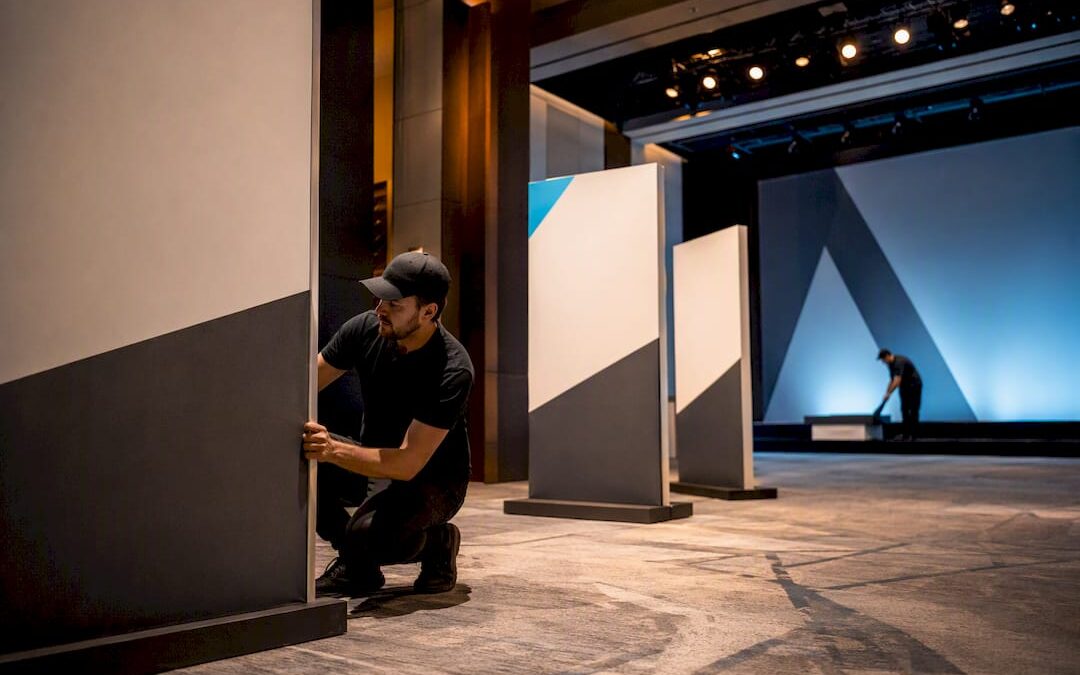
Hire a creative agency to design your corporate event signage as one connected system, not a pile of one-off signs. That decision consistently produces the cleanest, most memorable brand experience for attendees. The next move is simple: pin down your scope (audience size, venue type, timeline, and budget), then book a discovery meeting. One experienced agency option is built around exactly this kind of end-to-end signage system.
TL;DR:
- Agencies provide a cohesive signage system that ensures visual consistency across all touchpoints, unlike print vendors who only produce individual signs.
- Locking down brand rules for logo use, colors, typography, messaging, and file standards prevents costly mistakes and inconsistent displays during the event.
- Placement of signs at decision points like entrances, stage, and networking zones directly influences attendee engagement and brand recall.
- Clear, detailed briefs covering scope, timeline, and desired outcomes help agencies deliver tailored, on-time signage solutions that match event needs.
- Conducting thorough on-site reviews of sightlines, lighting, and sponsor logo placement ensures signs are effective and look professional before event opening.
Table of Contents
- What an Agency Brings That a Print Vendor Can’t
- The Visual Rules Every Signage System Needs
- Where Signage Actually Earns Its Keep
- How to Brief and Hire the Right Agency
- Your Pre-Event Checklist for Signage Day
- How All City Graphix Approaches Event Signage Systems
- Start Your Signage Brief With All City Graphix
- Sources
- FAQ
What an Agency Brings That a Print Vendor Can’t
A print vendor fills an order. An agency builds a system. That difference shows up the moment your event has more than one signage touchpoint, which is basically every corporate event that isn’t a single-table pop-up.
Agencies think in terms of strategy and consistency across every place a guest encounters your brand: the entrance, the stage, the hallway signs, the lounge backdrop. A production-only vendor prints what you send them, correctly, but nobody on their end is asking whether your registration desk graphic matches the color story on your keynote backdrop. That gap is exactly where events fall apart visually. Working with an agency that handles both creative development and on-site logistics closes that gap and tends to catch scope problems before they become invoices.
A single point of coordination also cuts down on the last-minute scrambling that plagues multi-vendor events. When one team owns the creative direction and the production timeline, fewer things get lost in translation between the designer, the printer, and whoever is holding a level on-site at 6 a.m.
What that looks like in practice:
- One creative brief instead of five separate vendor conversations
- A single approval chain, so nothing ships without sign-off
- Consistent file specs across every sign format, from a step-and-repeat wall to a directional floor sign
- One team to call if something arrives damaged or the wrong size
An experienced agency brings extensive experience to this kind of work, built on a discovery-first process and a portfolio of projects where the signage, the stage, and the swag actually looked like they came from the same brand.
The Visual Rules Every Signage System Needs
Before a single sign goes to production, a competent agency locks down the rules that keep every piece looking like it belongs to the same event. Skip this step and you end up with a logo that’s slightly the wrong blue on three different banners, which is more common than most planners realize.
- Logo usage. Define clear space, approved lockups, and a minimum size so the logo never gets cropped, stretched, or shrunk into illegibility on a 40 foot backdrop or a 4 inch table tent.
- Color and lighting. Brand colors printed under fluorescent office lighting can shift dramatically under a ballroom’s warm wash or stage LEDs. Testing colors under actual event lighting conditions before final approval prevents an awkward surprise on install day.
- Typography and hierarchy. Headline sizes need to be readable from the distance attendees will actually stand, not the distance a designer sits from their monitor. Contrast matters more than font choice at 20 feet.
- Messaging and CTAs. Decide upfront how much real estate sponsors get, what tone the copy uses, and which message wins when space is tight. Not every sign needs a call to action, but the ones that do need one clear, unmissable line.
- File standards. Vector logos, high-resolution artboards, correct bleed and safe zones, and export specs matched to each format. This is the unglamorous part that determines whether install day is smooth or a nightmare of pixelated re-exports.
Assigning one internal brand lead who reviews and approves every asset before it goes to print prevents five different stakeholders from quietly making five different color calls.
Pro Tip: Print a small color swatch card and physically hold it under the actual venue lighting rig during your walk-through. A screen preview will lie to you; the room won’t.
Where Signage Actually Earns Its Keep
Placement decides whether great design gets seen or gets ignored, which is crucial for every type of corporate event, as detailed by a corporate event pianist who highlights the diverse experiences needing custom signage systems. The same backdrop that looks stunning at the entrance does nothing for you buried in a back hallway nobody walks through.
- Entrance and registration. This is the first brand impression attendees get, so a hero backdrop paired with clear wayfinding sets the tone before anyone even finds their name badge.
- Stage and presentation. Scenic backdrops, keyed graphics behind speakers, and sponsor recognition all live here, where the most cameras and eyes are pointed for the longest stretch of the day.
- Navigation. Directional signs, room identifiers, and agenda boards belong at actual decision points, not just anywhere there’s wall space. If people are hesitating at a hallway junction, that’s where the sign goes.
- Engagement zones. Networking lounges and photo backdrops with a branded step-and-repeat turn dead space into content your attendees generate for you, especially when a QR code links straight to a landing page or social tag.
Material and finish choices matter here too, mostly because event lighting is unforgiving. A matte finish that looked fine in the studio can go flat and lifeless under stage lights, while the wrong gloss level throws distracting glare right into a photo. These are design decisions the agency makes at the concept stage, long before anything reaches a production line. The same logic applies to related formats like trade show booth graphics, where lighting and sightline problems repeat constantly.
How to Brief and Hire the Right Agency
Getting a strong signage system starts with a tight, specific brief. Vague requests get vague proposals back.
- Define scope early. Spell out creative direction, whether you need reusable templates for future events, on-site oversight during install, and an exact deliverables list. Ambiguity here is where budgets quietly balloon later.
- Set a realistic timeline. Work backward from your event date with milestones: concept presentation, revision rounds, final art approval, production handoff, and install. Build in buffer before the date you actually need signs ready, not the event date itself.
- Evaluate on real criteria. Look at portfolio relevance to your industry and event type, how clearly they explain their process, whether they offer on-site installation support, how often they’ll communicate during the project, and whether pricing is itemized or vague.
- Ask the questions that actually reveal fit. Who specifically will be on-site the day of the event? What’s the turnaround time on proofs? What’s the revision policy before extra fees kick in? Can they show examples of a similarly scaled event, not just their flashiest client logo?
A strong agency will also push back constructively, suggesting a wall decal instead of a bulky retractable banner when floor traffic is tight, for instance. That kind of strategic substitution is a good sign you’re talking to a partner rather than an order-taker.
Your Pre-Event Checklist for Signage Day
Paste this into your event brief and run through it before anything ships to the venue.
Pre-flight checks:
- Final artwork approved in writing by your internal brand lead
- Color proofs reviewed under lighting conditions matching the actual venue
- All files handed off in the correct format for each specific sign type
- Installation plan confirmed, including who arrives when and with what
- A backup plan in place for a damaged, delayed, or missing piece
Walk-through priorities on-site:
- Sightlines from key vantage points, especially the main entrance and stage seating
- Legibility distance for every directional and headline sign
- Actual lighting conditions, checked in person, not from a rendering
- Physical obstructions like pillars, plants, or A/V carts blocking a sign
- Sponsor logos correct in size, placement, and hierarchy
- Digital signage content synced and running the current version
Pro Tip: Keep the agency’s on-site contact number saved in your phone under a name you’ll actually notice during a chaotic morning, not buried in an email thread from three weeks ago.
How All City Graphix Approaches Event Signage Systems
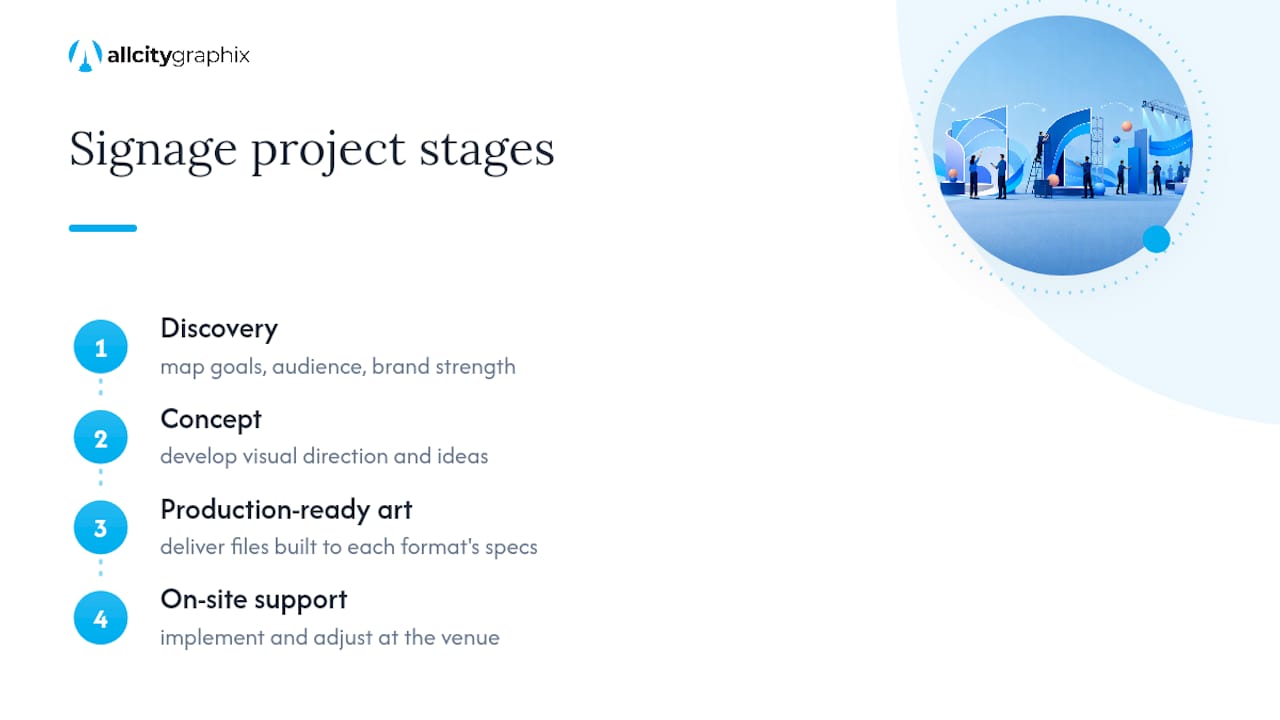
Every signage project starts with discovery: understanding the event’s goals, the audience, and where the brand is already strong or shaky. From there it moves into concept work, then production-ready art built to the exact specs each format demands, then on-site support so the plan survives contact with an actual venue.
Success isn’t a pile of pretty signs. It’s an attendee walking from the parking lot to the stage and never once wondering whose event they’re at.
That kind of consistency isn’t decoration. It’s the difference between an event people vaguely remember attending and one that actually reinforces what your brand stands for.
— Alex
Start Your Signage Brief With All City Graphix
A creative agency designs branded event signage the same way it approaches any brand project: strategy first, execution second, no guessing on-site. Rather than juggling a print vendor here and a freelance designer there, you get one team handling the creative concept, the file standards, and the on-site walk-through.
To get a real quote, come to the discovery conversation with your event date, venue type, expected audience size, a rough budget range, and your top one or two brand objectives for the event. That’s enough for the team to scope real deliverables instead of guessing. Explore the full range of event design services or head straight to the services overview to see what a discovery meeting with All City Graphix actually covers.
Sources
- How to find the right event partner for your 2026 event calendar – BizBash
- Corporate Event Branding: Make Your Brand Show Up Everywhere – Highway 85 Productions
FAQ
What Does Corporate Event Signage Actually Include?
It covers the full visual system for an event: entrance backdrops, stage graphics, wayfinding, room identifiers, sponsor recognition, and networking-area branding, all designed to share one consistent look.
How Far in Advance Should I Book an Agency?
Start the conversation as soon as your venue and date are confirmed, since concept development, revisions, and production handoff all need buffer time before install day.
What’s the Difference Between a Print Vendor and a Signage Agency?
A print vendor produces what you send them, while an agency like All City Graphix handles strategy, design consistency, and on-site coordination across every sign format at the event.
What Should I Bring to a First Discovery Meeting?
Your event date, venue type, expected attendance, budget range, and your top brand objectives are enough for an agency to scope real deliverables and a timeline.
Who Should Do the Final Walk-Through Before an Event?
An internal brand lead paired with the agency’s on-site contact should check sightlines, lighting, legibility, and sponsor logo accuracy before doors open.